What Actually Determines the Cost of a Move
The Packed Moving Solutions Team · Movers in Elmwood Park, IL · June 18, 2026 · 7 min read
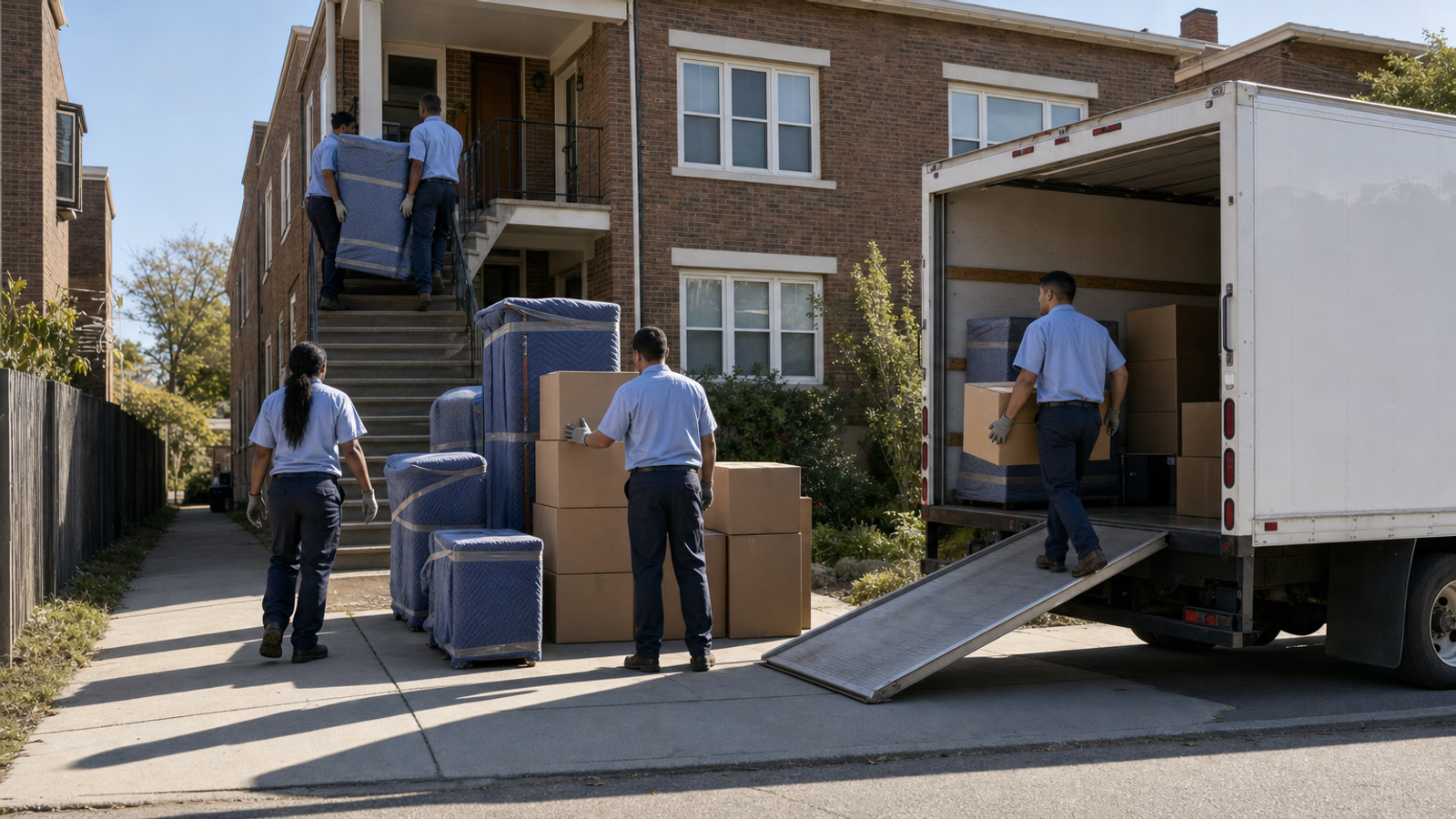
Moving quotes feel opaque until you know what is being counted, and then they are fairly simple. Four things do almost all of the work: how many items you have, how big a crew the job needs, how far apart the addresses are, and the access at each end. Everything else is detail. Here is what each one means and what you can do about it.
Volume is the base number. More items means more trips to the truck, a bigger truck or a bigger container, and more hours on the clock. It is also the factor you have the most control over, right up until the week before. A two-bedroom that has been lived in for eight years is not the same job as a two-bedroom someone moved into last year, even though both get described the same way on the phone.
Two movers are cheaper per hour and slower. Three or four are more per hour and can finish a job in half the time, which often costs less overall and always costs less if a building has given you a fixed elevator window. The right answer depends on volume, the heavy pieces and the stairs, which is exactly why a mover asks about all three before quoting.
Local moves around the northwest suburbs are mostly priced by time, so the drive between Elmwood Park and Schaumburg matters less than people expect and the traffic at 4pm matters more. Long-distance is a different model, usually priced by the space you take in a trailer or container. Our guide on long-distance loading explains how that one works.
Access is the sneaky one
The walk between the tailgate and your door gets repeated once per item, so a long carry quietly adds an hour to a job that looked simple. If you can hold the two closest parking spaces, clear the driveway or have the elevator reserved, you have changed the price of your own move before anyone arrives.
Access covers everything between the truck and the room: the flight of back stairs on a brick two-flat, the landing turn that a sofa will not make, permit parking on an Oak Park block, the freight elevator window a Des Plaines building hands out. None of it is unusual and all of it is time, which is why a mover who does not ask about it is not really quoting your move.
Packing is the first. A full pack is labor plus materials, a partial pack is much less, and packing everything yourself removes the line entirely. Specialty items are the second. Pianos, pool tables, hot tubs and safes are usually quoted per item rather than by the hour, because the route matters more than the clock. Neither should ever appear as a surprise on an invoice.
What drives a moving quote, and what you can do about each
| Factor | Why it moves the number | What helps |
|---|---|---|
| Volume | Every item is handled at least twice | Donate and sell before the move, not after |
| Crew size | Fewer movers is cheaper per hour and slower | Match the crew to the elevator window |
| Distance | Local is priced by time, long-haul by space | Avoid a 4pm load if you can |
| Access | A long carry repeats once per item | Hold the closest parking, clear the driveway |
| Stairs and elevators | Everything climbs on somebody's back | Give the floor and the turn when you ask for a quote |
| Packing | Labor plus materials | Pack the easy rooms, hand over the kitchen |
| Specialty items | Priced on the route, not the clock | Send the model, the weight and a photo |
Why a real quote beats a ballpark
These factors combine differently on every job, so an average per-room number is a guess dressed up as a price. A two-minute conversation about your rooms, your date and your access gets you a figure that still holds on the day. That is the whole reason we would rather you called than filled in a slider.
If you are already renting a truck or having a container dropped, you can hire only the loading and unloading and drive it yourself. That is how a large share of our work is booked, and for a one-bedroom it is often the difference between two movers for a few hours and a full-service day. Ask for both numbers and pick.
Usually, because local moves are priced by the time a crew spends while long-distance is priced by the space you take. But a local move with bad access and two flights of stairs can run longer than a straightforward move further away. Time and effort matter more than the map.
Move less. Every item you donate or sell beforehand is one nobody packs, carries, loads or unloads. After that, pack the simple rooms yourself and improve where the truck can park.
More per hour, and often less overall, because four people finish in much less than twice the time of two. If your building gives you a fixed elevator window, the larger crew is usually the cheaper decision as well as the safer one.
Often because they are quoting different jobs. One assumed you packed, another assumed a ground floor, a third did not ask about the piano. Give every company the same details, including the stairs and the parking, and the numbers get comparable.
Want a number built around your actual move?
Tell us what is in the house, where it is going and the access at both ends. The quote is free and there is nothing to sign.
Get a Free QuoteAbout the author
The Packed Moving Solutions Team · Movers in Elmwood Park, IL
Packed Moving Solutions is a moving and moving-labor company based in Elmwood Park, Illinois, owned by David Martinez. Our crews pack, load, unload and move across the Chicago northwest suburbs, and these guides come out of what we run into on the job.
An eight-week plan for moving around Elmwood Park, Oak Park, Schaumburg and the northwest suburbs. Start early and it becomes a series of small jobs.
The difference between a box that survives the truck and one that collapses in the hallway is six habits. Here are the ones our crews use every day.
Owning less when the truck arrives lowers every other cost of a move. A room-by-room way to cut the load without spending three weekends on it.