Chicago Suburbs Moving: Parking, Elevators and Winter
The Packed Moving Solutions Team · Movers in Elmwood Park, IL · August 6, 2026 · 7 min read
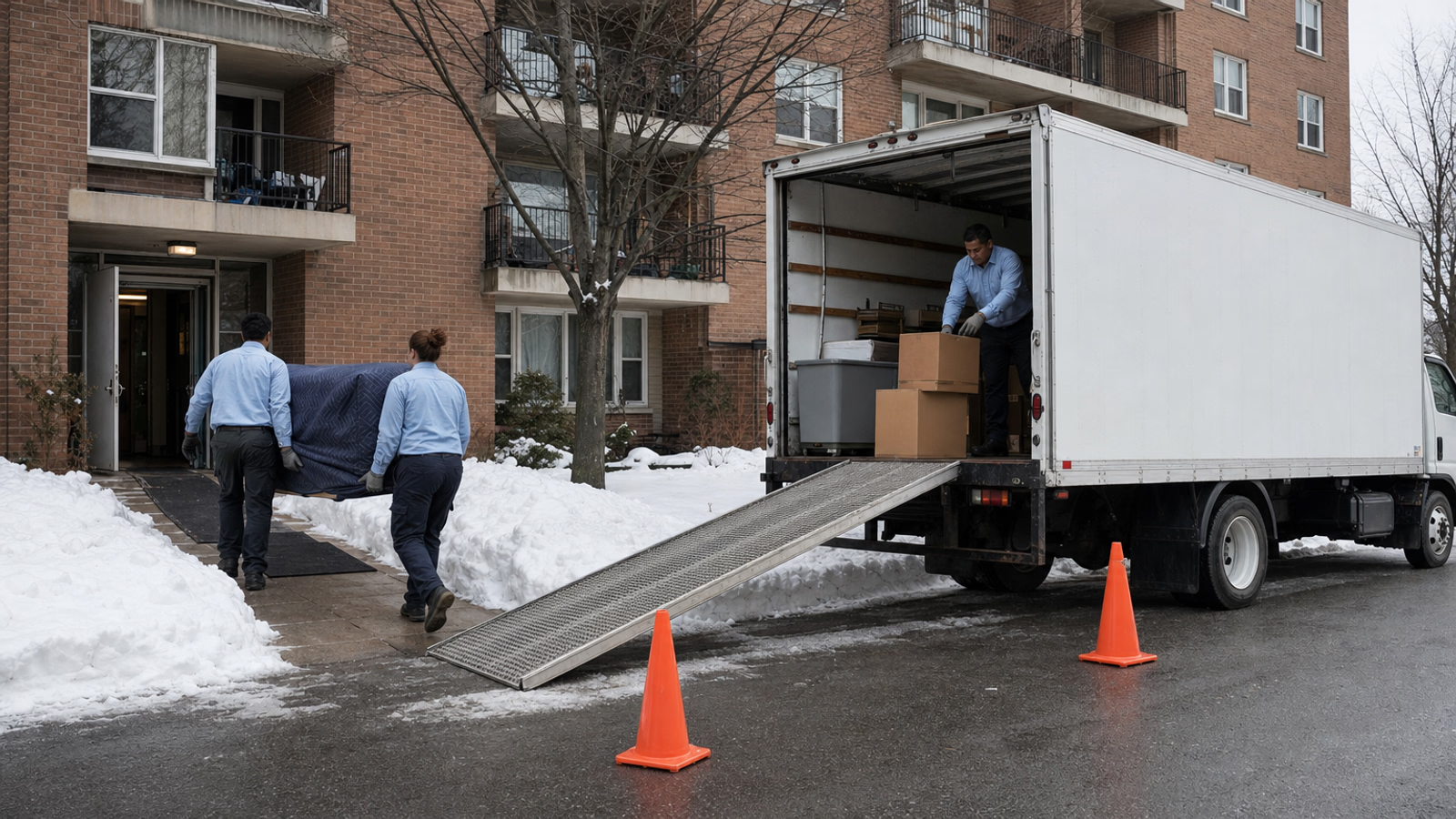
A move rarely goes sideways because something was heavy. It goes sideways because the truck had nowhere to sit, the freight elevator was out of service, or eight inches of snow arrived overnight and the alley never got plowed. Those three problems have one thing in common: every one of them is solvable a week ahead and unsolvable at 8am. Here is what to sort out before moving day in the northwest suburbs.
Suburban streets look easy from a car and are not always easy from a 26-foot truck. Older Near West blocks in Elmwood Park and Oak Park are tight, permit parking is common, and plenty of houses have an alley garage instead of a driveway. The distance between the tailgate and your front door is real money, because every extra step is repeated once per item.
Work out these answers before the day:
Ask the village, not the internet
Permit rules, fees and notice periods are set by each village and they change. Elmwood Park, Oak Park, Franklin Park, Schaumburg, Des Plaines and Park Ridge do not all handle this the same way. Call your own village hall, ask what a moving truck needs on your street, and ask the same question of the town you are moving to. It is a five-minute call that prevents the worst version of moving day.
Plenty of the northwest suburbs is apartments and condos rather than houses. Schaumburg and Roselle are full of townhome and apartment complexes, and Des Plaines and Park Ridge add mid-rise buildings with a management office. Most of them have rules about moving, and the rules are usually reasonable if you ask early and annoying if you ask on the morning.
Ask your building manager:
A two-hour elevator window is a hard deadline
If the building gives you a window, the crew size has to match it. A four-hour job with a two-hour elevator booking is not a four-hour job, it is a problem. Tell your movers about the window when you get the quote, because it may be the reason to send three movers instead of two.
Winter moves in Illinois are completely normal and they are also the ones that need the most slack. Snow is the obvious problem. The less obvious ones are wet floors in a hallway you are responsible for, a driveway nobody salted, and a truck that cannot get down an unplowed alley. Add a week of slack to your timeline and keep a backup date if you can.
Winter prep, in the order it matters:
Brick two-flats and older walk-up buildings around Elmwood Park, Oak Park and Franklin Park usually mean a narrow gangway down one side and a back staircase with a landing turn. Long pieces come down the back stairs and the turn is the part that decides everything. Measure the tight point, count the steps and tell your movers the number before they quote, and ask about taking the furniture apart rather than hoping a sofa pivots.
That depends on your village and your block. Permit parking and temporary reserved spaces are handled town by town, so call your own village hall and ask specifically about a moving truck. Ask the destination town the same question, because the answers are often different.
Ask the management office as soon as your date is firm, which for most buildings means a few days to a couple of weeks of notice. If the building gives you a fixed window, tell your movers about it while they are quoting so the crew size can match it.
No, winter moves happen every week here. They just need more slack: salt and cardboard down, a cleared driveway, a backup date and electronics left to warm up before you plug them in. Crews are also easier to book in January than in July.
Then the carry is longer, and a longer carry means more time, which belongs in the quote rather than on the invoice afterwards. Tell your movers where the truck will realistically sit and they can plan the route and the crew size around it.
Tell us about the access and we will plan around it
Stairs, alleys, elevator windows and a February forecast are all normal here. Give us the details and the quote accounts for them up front.
Get a Free QuoteAbout the author
The Packed Moving Solutions Team · Movers in Elmwood Park, IL
Packed Moving Solutions is a moving and moving-labor company based in Elmwood Park, Illinois, owned by David Martinez. Our crews pack, load, unload and move across the Chicago northwest suburbs, and these guides come out of what we run into on the job.
An eight-week plan for moving around Elmwood Park, Oak Park, Schaumburg and the northwest suburbs. Start early and it becomes a series of small jobs.
The difference between a box that survives the truck and one that collapses in the hallway is six habits. Here are the ones our crews use every day.
An office move is a scheduling problem wearing a lifting problem's clothes. How small offices around Schaumburg and Oak Park close Friday and open Monday.