The Chicago Suburbs Moving Checklist
The Packed Moving Solutions Team · Movers in Elmwood Park, IL · September 2, 2026 · 8 min read
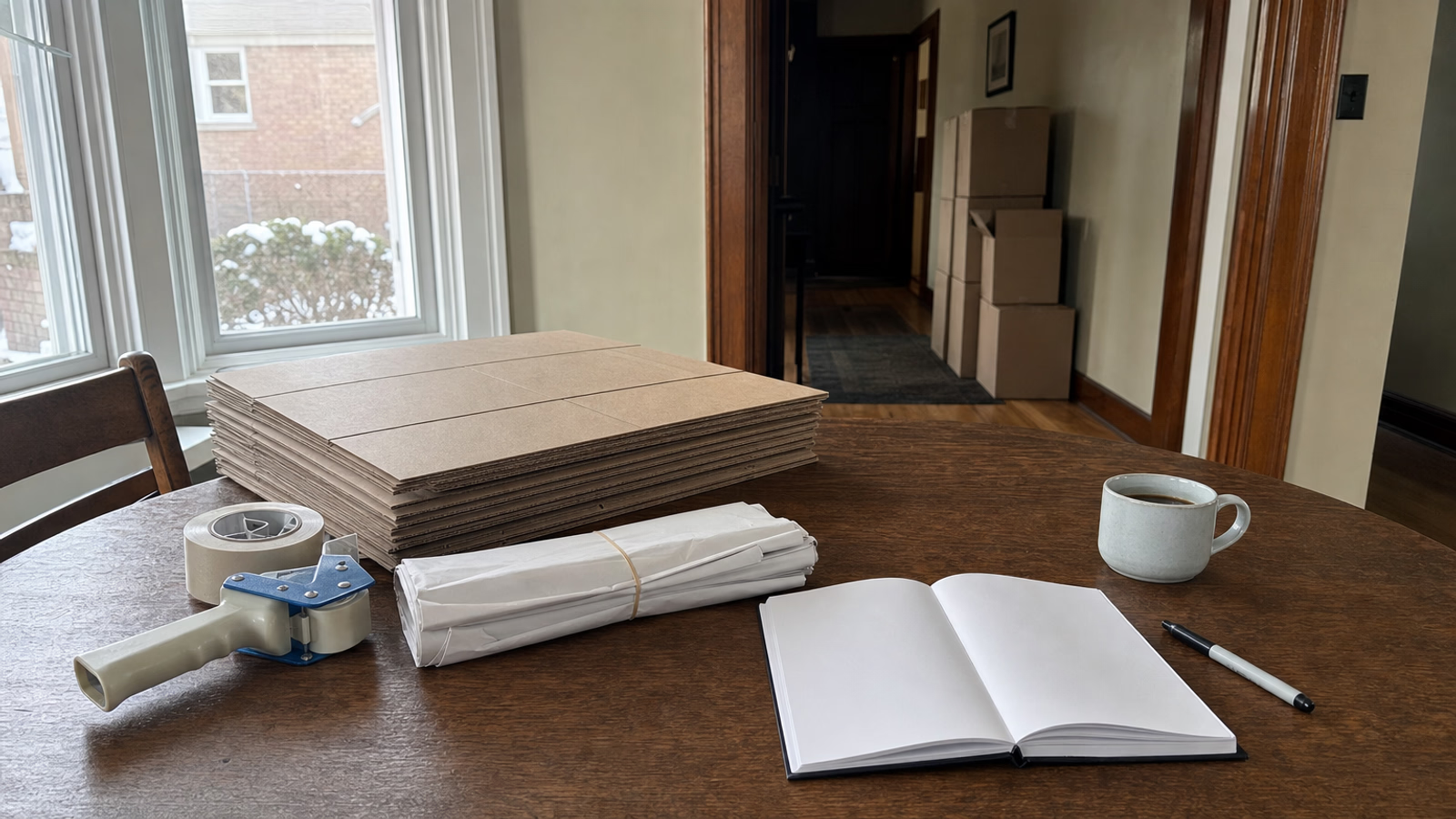
Almost every rough move we turn up to has the same cause. It all got left to the last week, so packing, paperwork, parking and the utility transfers landed on the same three days. The fix is not working harder in that week, it is starting eight weeks out and spreading the work thin. Here is the timeline we walk customers through for a move around Elmwood Park, Oak Park, Schaumburg or anywhere else in the northwest suburbs.
This is the thinking week, and almost none of it involves boxes. Lock the date, or at least the week, because the last few days of any month are when leases turn over and every crew in the area is spoken for. Then walk the house and decide what is not making the trip. Every item you let go is one you do not pack, carry, load, drive, unload and unpack.
Worth doing this week:
Get two or three quotes and make sure they are quoting the same job, because a number for a two-bedroom means nothing without the stairs, the parking and the packing. The bigger question is who does the packing. A full pack, a partial pack, or all of it yourself changes the price more than almost anything else on the estimate. Our guide on what actually determines the cost of a move breaks the factors down.
Before you book anyone:
This is the step people in the suburbs skip, and it is the one that stalls a crew on the doorstep. Village rules differ from town to town. Some blocks are permit parking, some buildings hand out a freight elevator window, and a management office will usually want a few days of notice. Sort it now while there is still time to be told no and find another answer.
Ask your village and your building directly
Parking rules and moving policies are set locally and they change, so check with your own village hall and your own building manager rather than trusting a blog. The two questions worth asking are whether a moving truck needs a permit or a reserved space on your street, and whether the building requires the elevator to be booked and padded. Do the same for the address you are moving to.
Admin week. None of it is hard and all of it is annoying once you have moved, so get it done while you still have a kitchen table to sit at. Overlap the utilities by a day at both addresses if you can, because arriving to a cold house with no lights in January is a genuinely bad start.
The list that actually matters:
By now everything except the kitchen, the bathroom and the beds should be boxed. Label each box with the room it is going to rather than the room it came from, because that label is an instruction to the crew, not a memory aid. Then pack one box you keep with you: the one that means you can shower, eat and sleep before anything else gets opened.
In the essentials box:
Your job on the day is to make decisions quickly and stay out of the walkway. Hold the parking spot, prop the doors, point each piece to its room and keep pets shut in one room with a sign on the door. If you have booked assembly, say which bed you want built first, because that is the one you will care about at 10pm.
The eight-week plan at a glance
| When | The one thing that matters | Why |
|---|---|---|
| 8 weeks | Set the date and decide what goes | Less stuff is the only change that lowers every later cost |
| 6 weeks | Get quotes and book the crew | Month-end and Saturday dates go first |
| 4 weeks | Sort parking and elevator access | Village and building rules need notice, and notice takes days |
| 2 weeks | Utilities, mail and records | Easy now, miserable after you have moved |
| 1 week | Finish packing, build the essentials box | The last rooms always take longer than you think |
| Move day | Point, decide, stay out of the walkway | A crew moves at the speed of your answers |
Winter moves need an extra week
A Chicago move between December and March needs salt and cardboard down on the floors, a cleared driveway and walk, and a plan for what happens if the street is not plowed by 8am. Add a week of slack to the whole timeline and keep a backup date in your back pocket. Electronics that have ridden in a cold truck should sit inside for a few hours before you plug them in.
Two to four weeks of notice is comfortable for most moves, and the last few days of the month fill first because that is when leases turn over. If your date is a Saturday at the end of a month, book it as soon as it is firm.
Move less. Every item you donate or sell before the move is one nobody has to pack, carry or unload. After that, the next biggest levers are packing some rooms yourself and improving where the truck can park.
It depends on your village and your street, and the rules change, so ask your own village hall rather than assuming. Ask about the destination address too, because the two towns will not have the same answer.
Weekdays are easier to book and the streets are quieter, but most people need a weekend. If your dates are flexible, a mid-month weekday is the easiest day of all to get the crew you want.
Want a number for your move?
Tell us what is in the house, where it is going and what the access looks like at both ends. The quote is free and takes about two minutes on the phone.
Get a Free QuoteAbout the author
The Packed Moving Solutions Team · Movers in Elmwood Park, IL
Packed Moving Solutions is a moving and moving-labor company based in Elmwood Park, Illinois, owned by David Martinez. Our crews pack, load, unload and move across the Chicago northwest suburbs, and these guides come out of what we run into on the job.
The difference between a box that survives the truck and one that collapses in the hallway is six habits. Here are the ones our crews use every day.
Four things set the price of almost every move, and you control three of them. What a mover is really pricing when you call for a quote in the suburbs.
Three things stall a suburban move: nowhere to put the truck, an elevator nobody booked, and February. Here is how to handle all three before the day.